How Long Is the GRE in 2025? Test-Day Timeline & Stamina Tips
5 min read
Nov 30, 2025
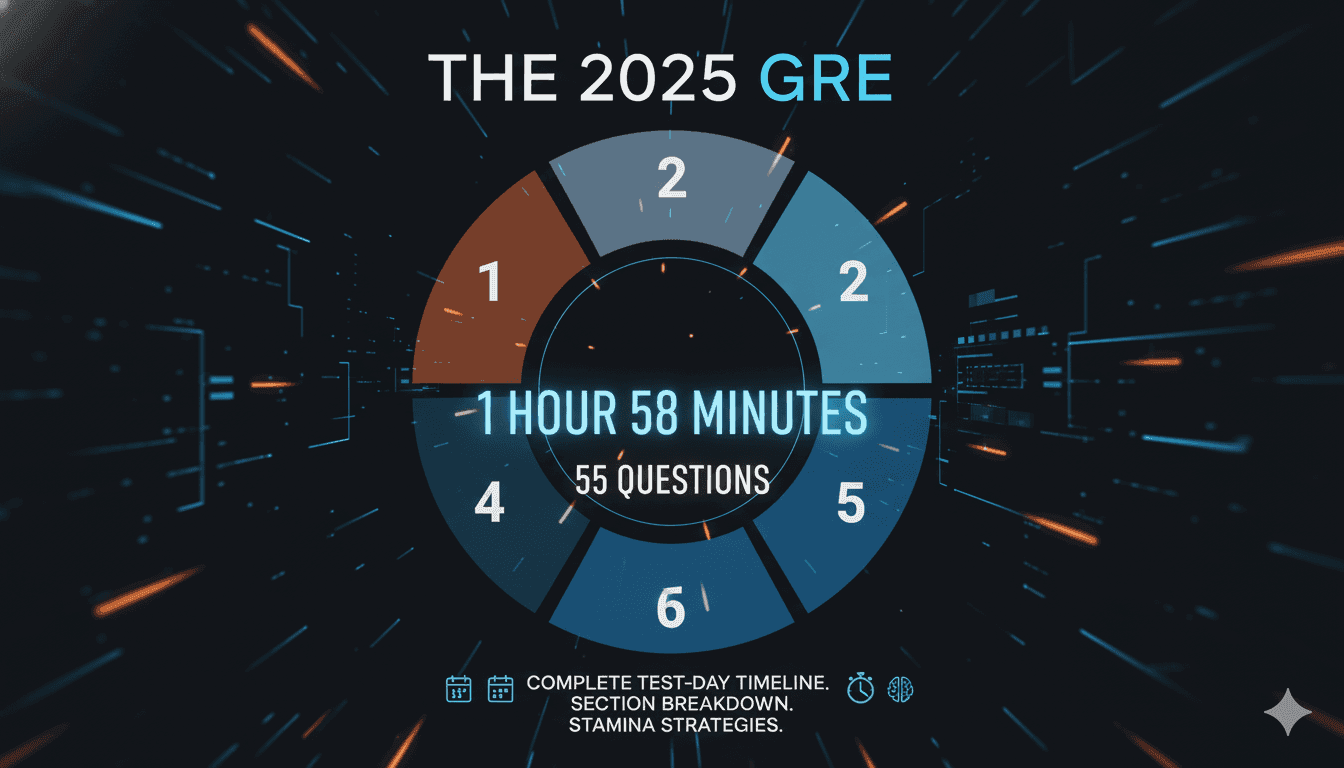
The GRE takes exactly 1 hour and 58 minutes in 2025—less than half the time it took just two years ago. This dramatic reduction isn't just about convenience; research published in the Proceedings of the National Academy of Sciences found that test performance decreases by 0.9% for every additional hour of testing. The shorter GRE format may actually work in your favor.
But here's what most test-prep guides won't tell you: the real test-day experience extends beyond those 118 minutes. Understanding the complete timeline—and how to manage your mental energy throughout—can give you a genuine scoring advantage.
GRE 2025 Format: Complete Section Breakdown
ETS restructured the GRE in September 2023, cutting the test from nearly 4 hours to under 2 hours. The format hasn't changed since, and here's exactly what you'll face in 2025:
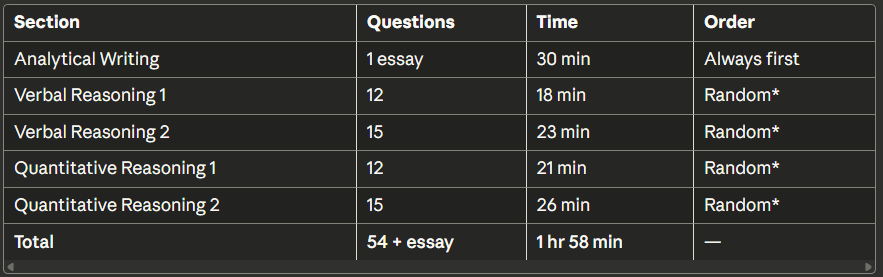
*After Analytical Writing, Verbal and Quant sections appear in any order.
Why Section Order Matters More Than You Think
The GRE is section-level adaptive, meaning your performance on the first Verbal or Quant section determines the difficulty of the second. Score well on Section 1, and you'll face harder questions in Section 2—but with higher scoring potential.
This creates a strategic reality: your first 12 questions in each subject carry disproportionate weight. Rushing through Section 1 to "save time" for Section 2 is backwards thinking. The harder second section is where top scores are made or lost.
Your Complete Test-Day Timeline
While the test itself runs under 2 hours, plan for approximately 2.5–3 hours at the testing center:
- Arrival (30 min before): Check-in, ID verification, and locker storage
- Test time: 1 hour 58 minutes of actual testing
- Score review (5 min): Decide whether to accept or cancel scores
- Score reporting (5 min): Select up to 4 free score recipients
Important: The new GRE has no scheduled breaks. Once you start, you'll move through all five sections continuously. This makes pre-test preparation and stamina management critical.
5 Research-Backed Stamina Strategies
Cognitive fatigue is real and measurable. The same PNAS study found that even brief 20–30 minute breaks can improve test performance by 1.7%. Since you won't get breaks during the GRE, your preparation strategy needs to account for sustained focus.
- Simulate Full-Length Conditions
Practice tests should replicate real conditions: no breaks, no phone checks, complete 2-hour sessions. Your brain needs to build the neural pathways for sustained concentration before test day. - Master Energy Allocation
The Analytical Writing section always comes first. Some test-takers make the mistake of pouring maximum effort into their essay, leaving themselves mentally depleted for the scored multiple-choice sections that follow. Aim for a solid, efficient essay—not a masterpiece that drains your reserves. - Use Strategic Skipping
The GRE allows you to mark questions and return within each section. Spending 4+ minutes wrestling with one problem doesn't just cost time—it creates cognitive strain that affects subsequent questions. Flag difficult questions, move forward, and return with fresh perspective. - Optimize Your Test Timing
If you're testing at a center, morning appointments typically mean fresher mental resources. Research on circadian rhythms consistently shows cognitive performance peaks in late morning for most adults. The GRE at Home option offers flexibility to test during your personal peak hours. - Fuel Strategically
Complex carbohydrates and protein before the test provide steady glucose for brain function. Avoid sugar spikes that lead to mid-test crashes. Hydrate well but moderately—bathroom breaks during the test mean lost time and broken concentration.
The Bottom Line
The 2025 GRE runs 1 hour and 58 minutes with 55 total questions across five sections. No breaks, no experimental sections, and faster score reporting (8–10 days versus the old 10–15).
The shortened format is genuinely good news for test-takers—less time for fatigue to erode your performance. But this also means every minute counts more. Understanding the test structure, practicing under realistic conditions, and managing your cognitive resources strategically can make the difference between a good score and your best possible score.
Your next step? Take a full-length practice test under timed conditions. Notice where your focus wavers. That's exactly where your preparation should target.
Frequently Asked Questions
How long is the GRE total test time in 2025?
The GRE takes 1 hour and 58 minutes of actual testing time. Plan for approximately 2.5–3 hours total at the testing center to account for check-in procedures and post-test score reporting.
Does the GRE have breaks in 2025?
No. The shorter 2025 GRE format has no scheduled breaks. You'll move continuously through all five sections once testing begins.
How many questions are on the GRE?
The GRE contains 54 multiple-choice questions (27 Verbal, 27 Quantitative) plus one Analytical Writing essay, totaling 55 scored items.
When do I get my GRE scores?
You'll see unofficial Verbal and Quantitative scores immediately after testing. Official scores, including Analytical Writing, are available in your ETS account within 8–10 days.
